Sunday, March 31, 2013

Come fly with me


Page X20 of the 1981 D&D Expert rules includes a section titled "Traveling by Air", which includes this neat section rating who can ride what by hit dice.  For example, human-sized characters can ride (or be carried off by) all the canonical BX dragons because all those winged lizards have at least 6 hit dice, the minimum required to lift a human.  My favorite part is that flying creatures rated from 3 to 5 hit dice can carry halfling-sized riders.  (Pegasi and hippogriffs fall in this hit die range, but are specifically granted an exception allowing them to carry bigger folk.)

So I thought I'd look through the BX monster sections to see what sort of flying monsters a band of pint-sized aerial adventurers could ride.  Here's what I found:

gargoyle - a mount immune to normal weapons will probably get you into more trouble than you want
harpy - might require ear plugs or larynx removal
lizard, draco - goblins on dragon lizards sounds pretty cool
cockatrice - illogical, unfeasible but imagine a halfling sheriff enforcing law from the back of one of these
hawk, giant - sounds cool
pteranodon - maybe you'd think a dinosaur with a 50' wingspan could carry a fullsized human, but with only 5 hit dice that isn't the case, still I'm imagining cave halfings on these babies and that sounds cool
wraith - If you see a halfling wearing a necro-harness and riding the back of a wraith, run.  Just run.

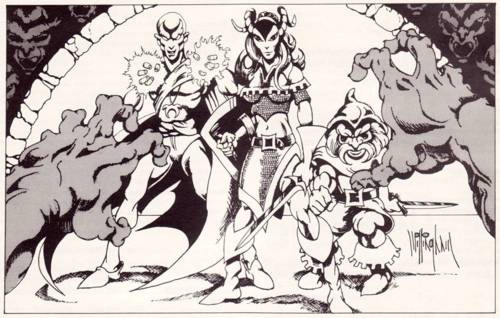
The Erol Otus illo at the top of the post is from the page with the Travelling by Air rules.  I've often wondered about that hippogriff-rider.  Is that a cyclops with a ponytail wearing a crown?  And the woman on the flying carpet looks like she has horns on her head, which contributed to my theory that maybe elves or some elves or elf-women or at least some elf women had horns.  See also this Bill Willingham piece from the inside cover:

Triple badass threat.


Saturday, March 30, 2013

Celestial Sects of Sarpedon, part 1


Eventually this will be a big ol' chart (maybe d20) that newly minted clerics roll on.

Celestial Sects

1.
SECT NAME:
The Crimson Arbitrators
GOD:
Arishem the Judge, He Who Judges
SYMBOL:
see below
GARB:
red robes, white belt/girdle/sash, ridiculous cylindrical hat
SPECIAL RULES:
no holy symbol required, instead each 1st level cleric receives a small runic tattoo with special white ink on their right thumb which serves as their holy symbol.  Upon advancing a level the cleric must get the new tatoo expanded.  By third level the thumb and part of the palm are covered, by ninth the hand and forearm.
OTHER STUFF:
Often called upon to settle disputes.

2.
SECT NAME:
Order of the Seventh Eye
GOD:
Eson the Search, Lord of the Seventh Eye
SYMBOL:
hand with eye in palm
GARB:
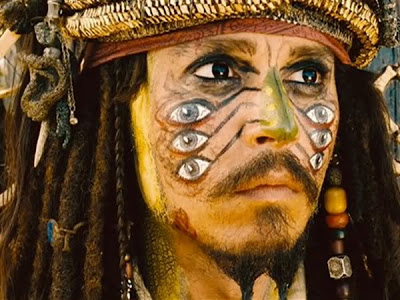
robes of green and one other color, typical dark red, brown or purple; clerics of this order paint their faces with 2 additional sets of eyes, kinda like this:
SPECIAL RULES:
can use tridents (d6 stabbing 1 handed, d8 2 handed, throw range as hand axe), use 2 MU spells Water Breathing (as Cleric spell level 3) and Wizard Eye (as Cleric spell level 4)
OTHER STUFF:
temples tend to be by or under water


3.
SECT NAME:
Servants of the Gatherer
GOD:
Gammenon the Gatherer, the Golden Cyclops
SYMBOL:
winged eye
GARB:
varies from temple to temple, but lots of golden jewelry whenever possible
SPECIAL RULES:
can cast Web as a second level cleric spell, webs are shimmering red
OTHER STUFF:
clerics of this god tend to use knobby maces painted red, additionally they have access to some high tech weaponry (pistols, rifles, grenades, etc.) they totally swiped from some time-travelling Nazis

4.
SECT NAME:
The Measurers
GOD:
Hargen the Measurer, Lord of the Mountains
SYMBOL:
eye in a triangle or eye on a mountain
GARB:
green and orange robes, split cape
SPECIAL RULES:
none
OTHER STUFF:
temples on or at the foot of mountains

5.
SECT NAME:
The Rune Lords of Jemiah
GOD:
Jemiah the Analyzer
SYMBOL:
a series of special runes worn on a headband/tiara/crown, sometimes a blue heart
GARB:
greens, greys and blues, covered with nonsense runes
SPECIAL RULES:
gains Read Magic as a 1st level Cleric spell, usable for unlocking MU scrolls
OTHER STUFF:
because the Rune Lords can use but not transpose MU scrolls they are widely reviled by magic-users for their ongoing depletion of ancient magics

6.
SECT NAME:
Children of the Smiling Shadow
GOD:
Nezzar the Calculator, the Smiling Shadow
SYMBOL:
a handheld cube, pyramid, octahedron or dodecahedron of transparent glass, crystal, etc.
GARB:
black and blue robes, hooded cloaks
SPECIAL RULES:
may use Phantasmal Forces as cleric level 2 spell, +2 saves versus cold (becomes +4 at level 5)
OTHER STUFF:
According to rumor, the greatest temples of this sect are at Sarpedon’s poles

Wednesday, March 27, 2013

Five Things You Need to Know About Sarpedon

Howdy!  Back in April of last year I wrote a weird thing about a science fantasy D&D world I called Sarpedon.  I've decided to try fleshing it out a bit.

Five You Need to Know About Sarpedon

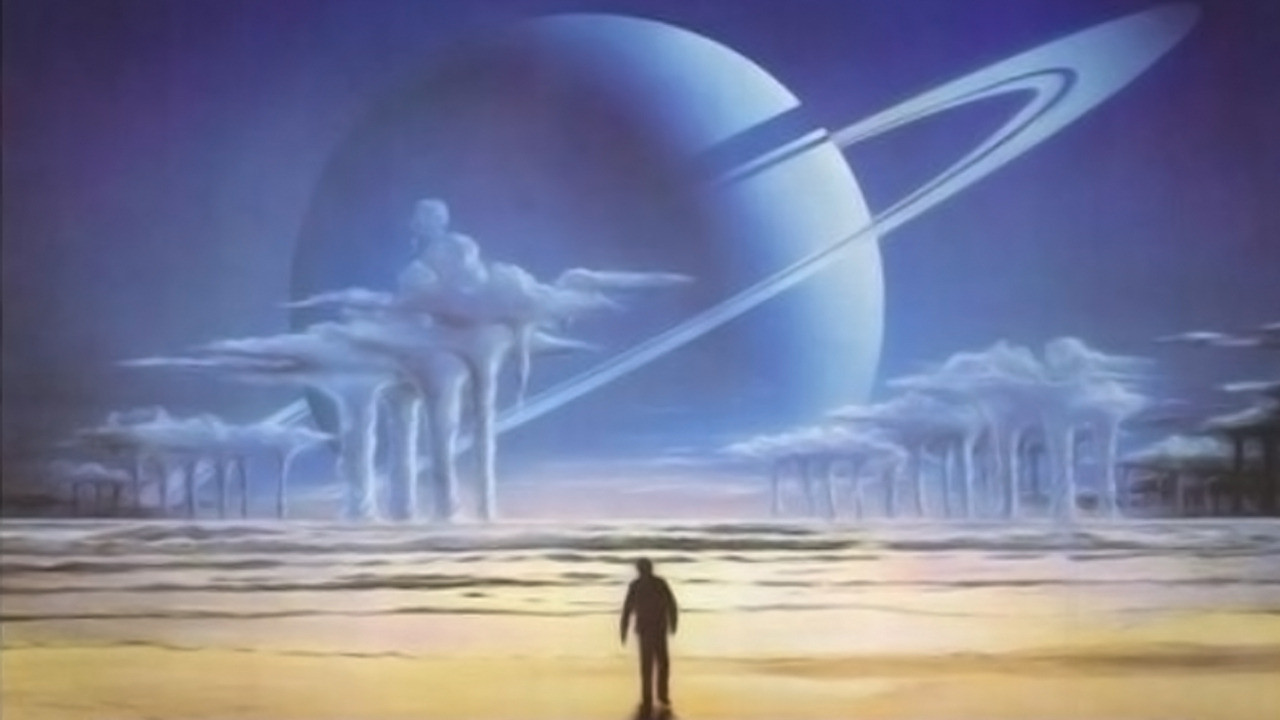
1. Sarpedon is a gas giant system. A huge ringed planet looms in the sky. Technically the world that the adventures happen on is Sarpedon E, the gas giant being Sarpedon Prime. However, in daily conversations its clear to most people whether you are talking about the Sarpedon in the sky or the Sarpedon under your feet, so most folks don’t specify.


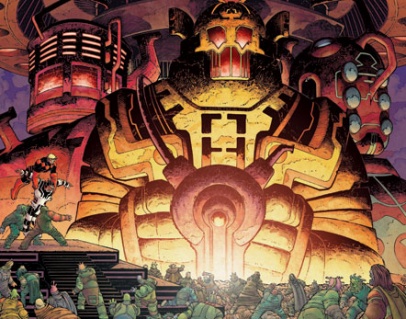
2. Jack Kirby’s Celestials are the gods of the setting. These armored space giants are just as silent and enigmatic as in Kirby’s original vision, so that the various beliefs of the sects and temples on Sarpedon are based upon what people think about the Celestials. The gods are real. The divine power of clerics seems to be based upon them somehow. But they don’t hand out cosmic truths or give commands.


3. It gets pretty hot on Sarpedon. People dress more like Frazetta’s Barsoom than most Middle Earthy fantasy worlds.  I'm still working on a good simple rule for overheating while wearing heavy armor that uses one's Con score but isn't a complete kick in the pants.


4. There are two strains of humanity on Sarpedon, with their own histories and cultures. The Cyrannians (see below) are descended from Earth people, while the Gandaharians have their own range of skintones (blues being most common, but reds, yellows, greens, greys and stark whites have been seen). The Gandaharians have a genetic predisposition towards total baldness and some have pointed ears, but otherwise they are physically identical to Earth-type humans. Beyond appearance, there are major cultural differences between Cyrannians and Gandaharians. The Gandaharians live in small matriarchal groups. Their technology tends to be more organic.


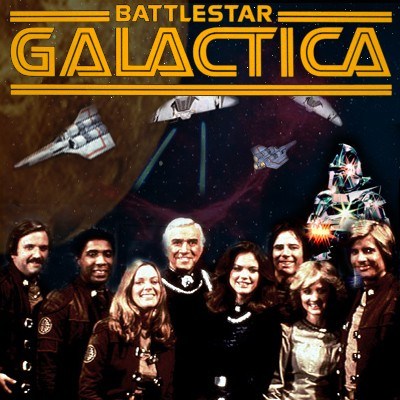
5. The Cyrannians are descendants from a minor colony so far in the space boonies that the Cylons didn’t know they existed. They never got the evacuation order. New Cyrannus on Sarpedon E is a colony of the original Cyrannians, though contact with the mother world has been lost for centuries.  Their culture is more classic D&D faux-medieval pseudo-feudal than the matriarchal tech-organic hippy-ness common to the Gandaharians.

Thursday, March 07, 2013

is my blog dead or what?

Hey, gang.  Spring break approaches and as a grad student I've got a crapload to do, but I thought I might try to hop on the wagon and start blogging again.  I've got some notes for a new campaign that I could flesh out a bit and at least one really stupid D&D rules idea we can talk about.

The thing is, I've been considering switching venues, possibly to tumblr.  Would that be a big inconvenience for people?  I know that would make commenting a bigger hassle, but honestly I'm not sure if I can resume writing a blog and responding to comments.  And something about the interface just sooths me, whereas blogger has always been a mild pain in the ass.  I dunno.  Please share your opinion.

Friday, November 09, 2012

Wear it on your sleeve

In my welcome back post I asked folks for suggestions for future posts.  I'm going to start today with Ark's question "howsabout sharing something you've learned as a grad student and how it related to gaming?"

My first thought on that point was that people should really wholesale rip off Charles Dickens for locations, characters and plots to fill out their steampunk games.  But that's probably not a new idea.

But here's something I've been thinking about for a while.  When you're an undergrad on the first day of class the professor probably asks you to stand and say your name and what your major is.  As far as I can tell this serves no purpose other than to make the Undecideds feel bad, because it hardly ever comes up again.

In my grad classes though, we're all studying some form of English something or other so we dig deeper.  I introduce myself as being interested in English lit with a focus on literary hoaxes.  Sam tells us he's into how trauma theory can interrogate postcolonial literature.  Other Jeff says he's a creative writing dude really into hybrid texts.  Etc., etc.  Note that I'm also Other Jeff.  That's hilarious in a world where everyone reads Edward Said and/or Jacques Lacan, trust me.

What I dig about this is that we all get a good foothold up front about where we are coming from.  So like the other day in class I called out Sam on his insistence that pre-colonial texts are "authentic" cultural artifacts.  He knows I wasn't trying to harsh his groove, but that I'm the vaguely postmodern dude who insists that Fake Literature Is Real Literature.  We were able to have what I thought was a fruitful conversation and part of it was due to the fact that we both knew the other guy's priorities.

So you can probably see where I am going with this.  One thing I think good ol' Ron Edwards got right back in the day was the simple recognition that different gamers want different stuff and we should clearly articulate these differences.  I don't fully follow his next step, that we need to craft games to exaggerate certain priorities and minimize others.  Rather I think we can mostly all participate in the same sort of game and see what happens when these priorities push and pull each other during play.

Obviously this requires a little self-reflection on our parts.  When we give a table full of new people a line or two describing our interests, what should we say?  For example, "Hi, my name is Jeff and I'm here to get my PC into trouble" may really help the other players when my dude starts acting stupid.

Thursday, November 08, 2012

fine tuning your monsters

Most DMs I know like more monsters better than fewer monsters.  Monsters are lots of fun.  Writing new monsters can be a easy way to pretend you're working on your campaign.  Buying books jampacked with new monsters helps keep the hacks in the game industry fed.  It's all good.

But today I want to talk about how to turn the monster list you have into something peppier.  You don't need to write up some new monsters. or buy a new book or even drag an extra monster book to the game.  I'll walk you through three things you can do to make your players' lives hell in a fresh new way, using only the '81 Basic D&D rules as my example.

Step 1 - Throw Stuff Out
Take a look at your monster list and try to get a sense of it as a whole.  What parts of it can be easuly cut?  More monsters isn't better when trying to make a coherent campaign setting.  (Though if you are making an incoherent campaign setting maybe you should skip this step.)  For example, depending on how you slice it, there's maybe 100 monsters in the Basic rulebook.  That's not a lot compared to campaigns with Monster Manuals in play.  But even in this list there's fat to be cut.  Does my campaign world need both Giant Ferrets and Giant Shrews?  Hell, does it need either?

Then there are the broad categories with lots of individual monsters.  How many types of dragon do you need for this campaign?  In my Wessex campaign using not just one type of dragon but one single, individual dragon worked a hell of a lot better for me than any game I've run with lots of dragons.  And if I wanted to do something more Sword & Planet style, maybe I would cut the dragons altogether and prominently use the Draco Lizard (under Lizard, Giant, page B38) or the pterydactyls in the Expert set.

Similarly, not every campaign needs every kind of monster.  Does your campaign need kobolds, goblins, orcs, hobgoblins, gnolls AND bugbears?  Do you need skeletons, zombies, ghouls, wights AND wraiths?  One or two humanoid races and one or two undead may be enough to get the job done.  Or look at the entry for Cat, Great (page B32).  Most campaigns probably can survive without Mountain Lions and regular type Lions and Tigers and Panthers and Sabre-Tooth Tigers.  Just pick the one that suits you and stick the rest on a shelf.

Special warning: Be careful about cutting both orcs and dragons.  Orcs carry a bunch of Tolkienian and Warhammery baggage, but that baggage is something players can easily tune in on.  Or to put it another way, who doesn't like beating the snot out of orcs?  Similarly, dragons occupy an import conceptual space in Dungeons & friggin' Dragons.  Cutting them could alienate a lot of players.  Dropping both orcs and dragons may make some people wonder what the hell kind of artsy fartsy crap you are trying to pull on them.

Step 2 - Reprioritize
Now look at what you have left on your monster list.  What critters have you relied on in past campaigns?  What monsters have you not used yet at all?  As you situate your monsters into your campaign, consider a light touch with monsters you've already used and emphasize the stuff you have yet to take full advantage of.  Looking through the Basic rules I've never or only rarely used Sprites, Weretiger and Rock Living Statues.  Surely there's some great material waiting to be written about those creatures.  Sprites are "very curious".  What sort of trouble could they get into?  Maybe you could write a fairly standard Things Man Was Not Meant to Know adventure, only the trouble is the mad scientist type is actually a gang of magical tinkerbells. Weretigers are neutral lycanthropes.  That says to me you could write an adventure around needing to bring a band of those guys over to your side.  Or maybe you could do something with a Were- version of a white tiger being mistaken by locals as a ghost tiger.  And Rock Living Statues shoot lava from their fingers.  How come I don't use them all the time?

(Seriously, if either weretiger scenario or the sprite idea does anything for you, please steal it.  Every once in a while I get emails from folks "Hey, you mind if I use so-and-so in my game?  I think a lot of gaming bloggers would agree with me that we want you to use this stuff, otherwise we wouldn't share it.)

If you reprioritize your monsters, make sure you think through how this affects other mechanical elements in the game.  If you don't use dragons and focus on Rock Living Statues, maybe you should replace that sword +1, +3 vs dragons with something that beats up lava jerks.  Similarly, making undead less ubiquitous means you need to think about how that pimps over clerics.  Maybe you should allow them to turn something else or *gasp* grant them spells at first level.  Who charm person affects is another issue.


Step 3 - Repurpose
This is where you take the monsters as written and screw with them in some way to make them unique to your campaign.  Not every monster should be an exercise in "Oh, in Jeff's extremely hip campaign orcs are actually corssdressing timetravellers..."  Too much of that robs D&D of the lingu franca status that allows things like FLAILSNAILS to really work.  But a little such monkey business can really give you some neat material to work with.  You can start with little cosmetic things, like making Giant Tiger Beetles literally half beetle, half tiger (or half Beatle, half tiger).  Or making lizard men into full on Sleestaks.  I like giving Giant Crab Spiders big pinchy claws.

You can also think in terms of what ISN'T included in the monster descriptions.  The BX rules don't tell you that Skeletons are unintelligent undead robots or that Owlbears are no smatter than the average bear.  Maybe the skeletons in your campaign can be reasoned with, if you can get them to shut up about how much they miss being alive.  Whiny bastards.  And maybe owlbears actually have mythical owl wisdom and the PCs accidentally murder the Helpful Forest Oracle they were looking for.

And don't hesitate to just flat out steal stat blocks.  Maybe you campaign world doesn't need ogres as such, but if you want to quickly stat up some sort of big angry gronk, there's four hit dice of grumpy waiting to be used.

Wednesday, November 07, 2012

Yo!

Howdy, folks!  I'm not dead and neither is this blog.  My first semester as a fulltime grad student has been kicking my ass.  I haven't even had a chance to play any D&D since friggin' August.  But I did get a draft of my Lamentations of the Flame Princess module to Jim Raggi, though I still need to redraw the maps and maybe take one more quick pass on the text.  But it's written.

Anyway, I'm going to try to get back in the saddle with regular updates here.  Either later today or tomorrow I'm going to try to work up something on the canonical monster list in B/X D&D.  Past that, I'm not sure what I'm going to write about next.  Feel free to offer suggestions in the comments.